
The outdoor hospitality sector is no longer an emerging asset class. Glamping alone represents roughly 29% of all camping experiences in North America, and the U.S. segment is on pace to roughly double between 2025 and 2032. Institutional capital is moving in. Hyatt partnered with Under Canvas. Hilton partnered with AutoCamp. The 2026 Camping and Outdoor Hospitality Report pegged camping-driven community spending at $66 billion in 2025, up more than $5 billion year over year.
That capital has to land somewhere, and it is not landing evenly.
The regions below are the U.S. glamping markets generating the most activity in 2026, whether measured by institutional capital movement, new supply coming online, ADR performance, or regulatory shifts that change what is buildable. The intent is to map the landscape, not to rank it. Every developer, operator, and investor underwrites to different criteria, and a market that is right for one thesis is wrong for another. We see most of this activity firsthand through our advisory work, and this is what the data looks like from where we sit.
Established markets
These are the regions with the deepest supply, clearest benchmarking, and most mature guest demand profiles. They are also the most competitive.
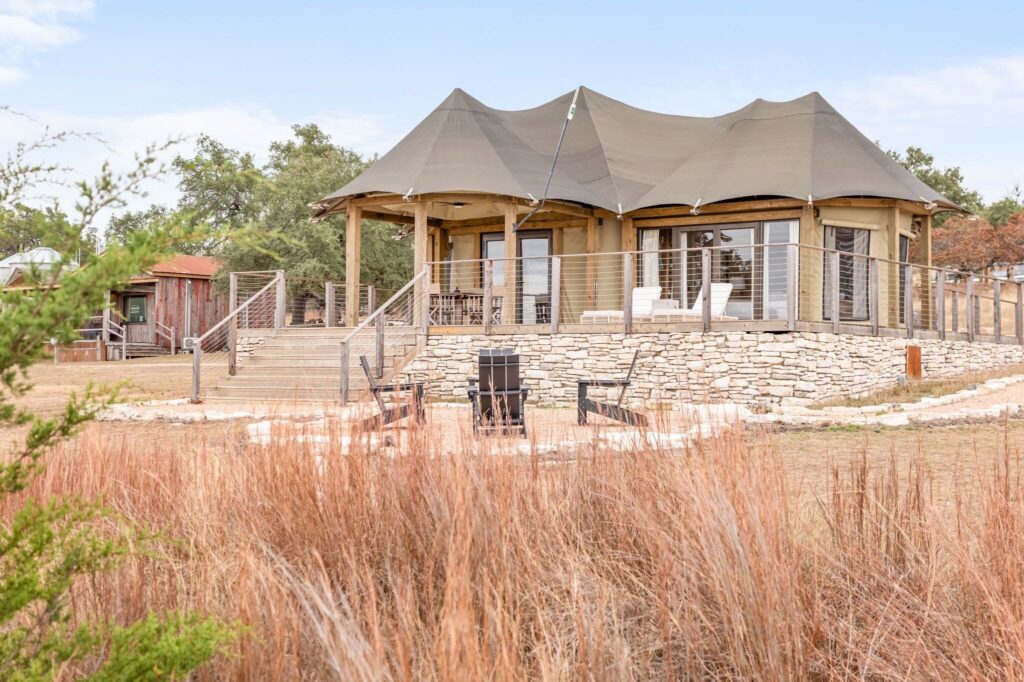
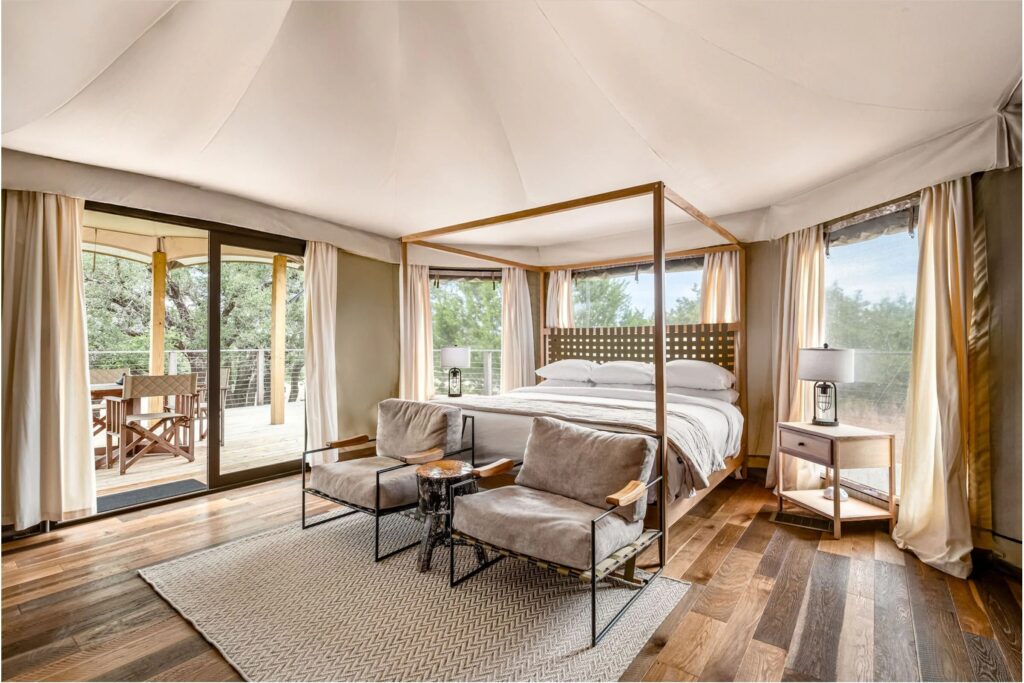
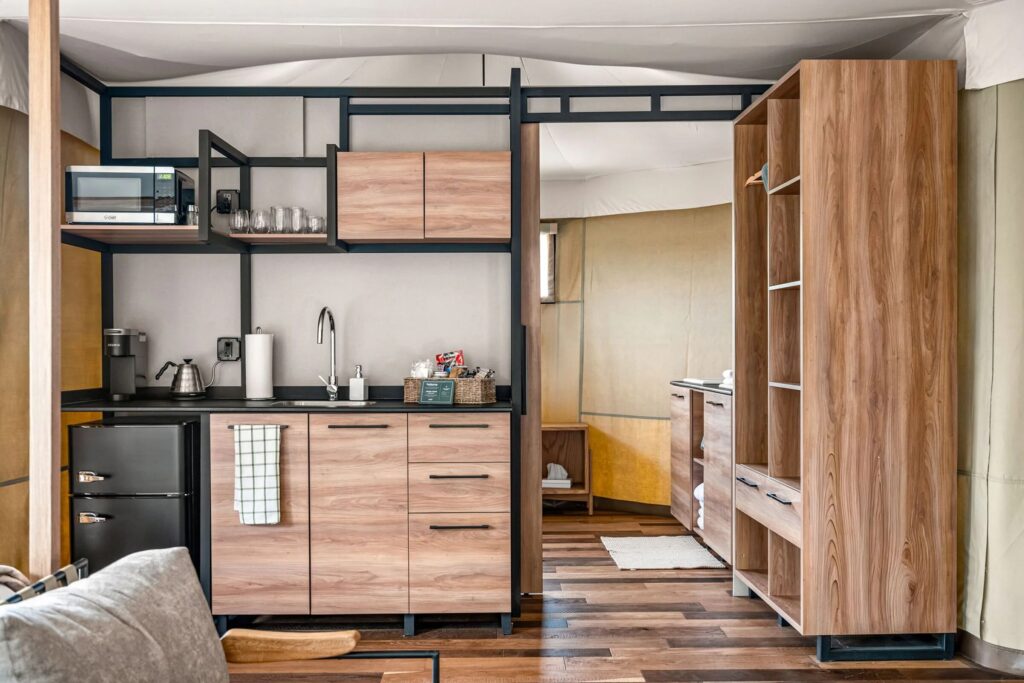
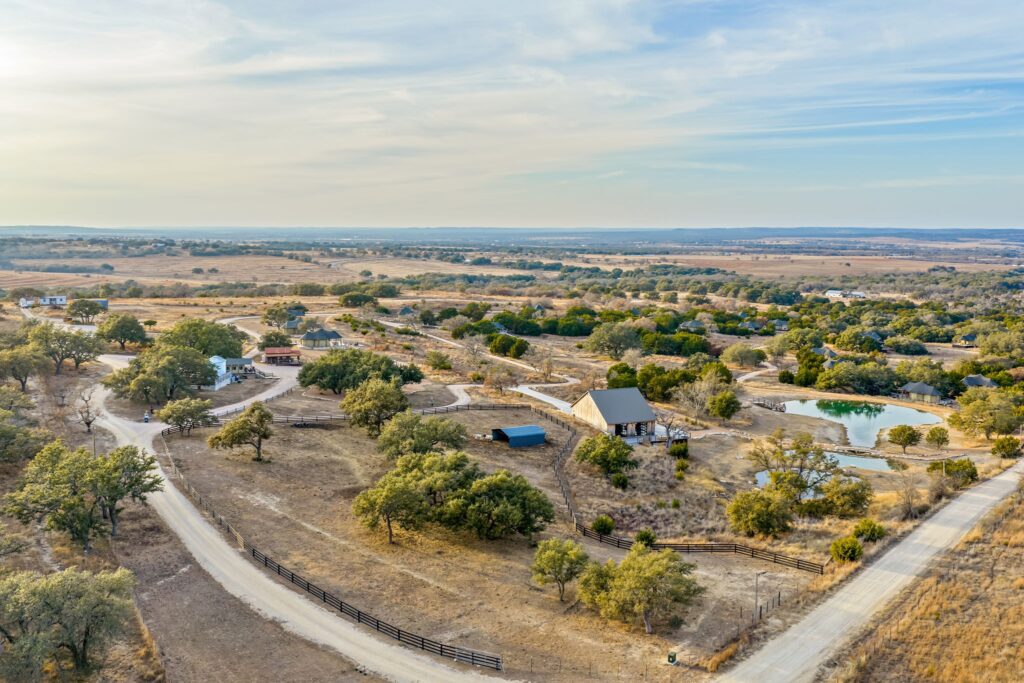
Texas Hill Country
The case: Drive-to demand from two major metros, weather that supports a long operating season, and a guest profile that pays premium rates for design-led accommodations.
The Hill Country sits within 60 to 90 minutes of Austin and San Antonio, two of the fastest-growing metros in the country. That positioning is the single most important demand driver in the region. The guest does not need a flight. Weekend and midweek trips scale with regional population growth, which is considerable.
Supply is catching up but not saturated. Walden Retreats, Outdoorsy Hill Country, Camp Fimfo, SKYE, and Wahwahtaysee have established the high end. ADRs at the top of the market consistently clear $350 to $500 on weekends, with shoulder-season pricing holding better than most comparable regions because of proximity-driven occupancy.
Where it gets complicated: Land prices along the wine trail corridor between Fredericksburg and Dripping Springs have moved materially in the last 36 months. Deals still pencil, but the underwriting is tighter than it was in 2022. Water rights and septic capacity are the two issues that kill Hill Country pro formas most often. Counties vary widely in their permitting posture, and flood risk requires serious diligence after the 2025 Guadalupe event.
Where we are watching: The corridor northwest of San Antonio toward Bandera and Medina, and the ring around Johnson City, both of which offer more favorable land basis than the core Fredericksburg market with similar demand characteristics.
Smoky Mountains corridor
The case: The most-visited national park in the country, institutional operator presence on both sides of the state line, a deep short-term rental ecosystem that has trained guest expectations, and a post-Helene recovery dynamic on the North Carolina side that is reshaping underwriting assumptions.
The Smoky Mountains corridor spans the Tennessee–North Carolina border and is best understood as one market with two distinct operating environments. The Tennessee side anchors on Gatlinburg, Pigeon Forge, and Sevierville, with Under Canvas Great Smoky Mountains operating on 182 acres near Gatlinburg, joined by Treehouse Grove at Norton Creek, Camp LeConte, Canopy Ridge, and a long tail of dome, yurt, and tiny-home operators. The North Carolina side centers on Asheville, with AutoCamp’s new 16-acre French Broad River property and Biltmore anchoring the demand profile.
The Tennessee side. Sevier County has one of the deepest short-term rental ecosystems in the country, and the regulatory environment is generally workable, with grandfathered STR rights preserved for properties built under prior rules. Guest volume is driven by the national park, Dollywood, and year-round drive-to traffic from the Southeast. ADRs are lower than Coastal California or Montana, but occupancy is the strongest in the corridor because of raw guest volume.
The North Carolina side. Asheville’s tourism sector is rebuilding from Hurricane Helene. Hotel occupancy remains roughly 20% below pre-Helene levels as of early 2026, and vacation rental revenue has been slower to return. For operators already in market, that is painful. For developers evaluating new sites, it is the buying opportunity. The fundamentals that made Asheville a top-five domestic leisure destination have not changed. Blue Ridge Parkway restoration is substantially complete. AutoCamp opened a 16-acre site overlooking the French Broad River. Biltmore is launching new evening programming. Visit NC received a $5 million federal recovery grant and is actively marketing the region into Charlotte, Raleigh, and Atlanta. Economic analysts are forecasting visitor spending growth of 5.2% in 2026.
Where it gets complicated: On the Tennessee side, Sevier County’s deep supply of STR cabins means new glamping entrants are competing against a mature, price-competitive lodging base. New STR permits have also tightened in some jurisdictions, which is worth watching for glamping spillover. On the North Carolina side, land in the immediate Asheville metro is expensive and constrained, post-Helene development requires rigorous floodplain and slope stability analysis, and insurance has gotten harder.
Where we are watching: On the Tennessee side, Wears Valley, Cosby, and Cocke County offer more favorable land basis than the core Gatlinburg–Pigeon Forge ring with similar demand drivers. On the North Carolina side, Henderson, Madison, and Yancey counties, and the corridor around Chimney Rock where more than 50 new climbing routes are opening. Secondary markets within 45 minutes of either anchor city offer better cap rates on acquisition and cleaner entitlement paths than the core.
California
The case: The second-largest glamping market in the country by supply, the highest ADRs in domestic glamping alongside Arizona and New Mexico, and demand that holds up year-round in much of the state.
California sits behind only Texas in U.S. glamping property count, and the state leads a short list that also includes Arizona and New Mexico in ADR, with properties in some corridors exceeding $250 per night on average. It is not one market. It is three or four, each with its own demand profile.
Coastal California. Big Sur and the Central Coast anchor the ultra-premium end. Ventana, Glen Oaks, and a handful of smaller properties operate with weekend ADRs that clear anything in the continental U.S. outside Montana. Supply is tight because developable coastal land is tight. Guest demand is deep across both domestic and international travelers.
Wine country. Sonoma, Napa, and Paso Robles have some of the strongest drive-to fundamentals in the country. The Bay Area guest is well-established, wine tourism creates reliable midweek occupancy, and agritourism framing opens zoning paths that pure lodging does not. Safari West and similar operators have proven the model at scale.
Joshua Tree and the desert corridor. The most distinctive subregion in the country for dome, yurt, and safari-tent formats. Guest demand concentrates on design-forward properties, and the Airbnb and short-term rental pipeline has seeded a sophisticated boutique market. Seasonality is inverse to the Mountain West: October through April are peak.
Where it gets complicated: California is the hardest regulatory environment in the country. CEQA review, Coastal Commission jurisdiction on coastal parcels, wildfire mitigation requirements, and county-level variation all add cost and timeline. Legislation passed in 2025 creating a state-level definition for “low-impact camping areas” could meaningfully streamline permitting going forward, but implementation is still early.
Where we are watching: The Sierra foothills between Yosemite and the Central Valley, the Santa Ynez and Los Olivos corridor north of Santa Barbara, and the high desert beyond the core Joshua Tree ring. All three offer more favorable land basis than the marquee submarkets with demand drivers that still support premium pricing.
Colorado and the Mountain West
The case: The deepest concentration of institutional glamping supply in the country, the highest ADRs in domestic glamping, and the most mature guest base.
The Mountain West is where the category was effectively proven out. Montana anchors the ultra-luxury tier: The Resort at Paws Up operates across 37,000 acres and sits alongside multiple Under Canvas properties near Glacier and Yellowstone. Colorado runs deep through the Front Range and the I-70 corridor, with Under Canvas, AutoCamp, Collective Retreats, and Outdoorsy all operating. Wyoming’s Jackson Hole corridor rounds out the region’s top tier.
That maturity cuts both ways. The good news: guest awareness, booking behavior, and ADR expectations are fully formed. You do not have to educate the market. The harder news: you are competing against brands with national distribution and sophisticated revenue management.
Top-of-market ADRs in the region’s premium corridors routinely exceed $600 in peak season, and the industry-wide ADR reached $251 per night in 2025, up 21% from $207 in 2023. Mountain West premium properties sit well above that national average. RevPAS at well-run properties is among the strongest in the country. ALOS trends longer than the national average, which reduces turnover cost and lifts margin.
Where it gets complicated: Land costs in Colorado’s I-70 corridor and around Montana’s national park gateways are institutional-grade. Water is the constraint that underlies almost every Colorado deal. Wildfire insurance has materially reshaped underwriting across the region. Short-term rental moratoria in certain jurisdictions are creeping toward glamping regulation, and operators should expect that trend to continue.
Where we are watching: In Colorado, the western slope outside Grand Junction and Palisade, the San Luis Valley, and the corridor between Salida and Buena Vista. In Montana, secondary gateway communities outside the Glacier and Yellowstone immediate rings. All offer more favorable land basis than the marquee submarkets with demand drivers that still support a premium product.
Emerging markets
These are regions earlier in their development cycle. Supply is thinner, benchmarking is noisier, and the thesis often depends on a specific catalyst: an institutional operator opening, a regulatory change, or a demand shift that has not yet shown up in the data.
Great Lakes, particularly southwest Michigan
Under Canvas’s Outdoor Collection opened The Fields of Michigan in South Haven in 2025 and is more than doubling capacity for the 2026 season, adding 26 tents to bring the property to 45 tents and 9 cottages. The thesis is simple: 2 hours from Chicago, 3 from Detroit, working-farm agritourism layered over glamping, and almost no institutional competition. The Lake Michigan shoreline from Harbor Country up through Saugatuck and Traverse City is underbuilt relative to demand.
Northern New England
Under Canvas is opening White Mountains NH in 2026, joining its existing Acadia property in Maine. The drive-to catchment from Boston, Portland, and the greater New York corridor is deep, and Maine’s coastal and inland markets still have developable land at a workable basis. Seasonality is the constraint. Properties that solve for shoulder season through winter programming or insulated unit types capture outsized margin. Our first #FromReportToGuests spotlight featured Arbor Camp in Ellsworth, Maine for this reason.
Pacific Northwest
The PNW sits in the second tier of Sage’s own state-supply data, behind the Texas–California leaders and alongside the Southeast. The demand profile is strong: drive-to catchment from Seattle and Portland, reliable shoulder-season performance that most Mountain West markets cannot match, and a guest willing to pay premium rates for weather-resilient cabin and pod formats. Under Canvas opened its first non-national-park-adjacent property in the Columbia River Gorge in 2025, which is a meaningful institutional signal for the region.
The constraint is the regulatory environment. Oregon and Washington counties vary enormously in their treatment of glamping, and the gap between RV park, campground, and transient lodging zoning is a minefield. Goal 3 and Goal 4 restrictions on resource land in Oregon kill otherwise attractive deals regularly. Washington’s SEPA review adds time and cost. Our rule of thumb in the PNW: do the entitlements diligence before the land diligence.
The corridors where we see the most workable combination of demand and entitlements are the Columbia Gorge on the Washington side, the north Oregon Coast between Pacific City and Manzanita, and the Methow Valley.
Agritourism crossover markets
The U.S. agritourism market reached $3.28 billion in 2025, and Hipcamp data shows vineyard listings book at three times the rate of average listings. Working farms, vineyards, and ranches that layer glamping onto existing operations benefit from multiple revenue streams and, in many states, favorable agritourism zoning exemptions. Finger Lakes, Willamette Valley, and the wine corridor in Virginia all fit this pattern.
Patterns across every market on this list
Wherever we see strong stabilized returns, a few habits show up repeatedly:
Drive-to demand is doing most of the work. Nearly every high-performing property in our portfolio sits within 90 minutes of a metro with more than a million people. Proximity to a national park helps. It is not required. We wrote a short post on this last week.
Unit mix matches the actual guest, not the Instagram version of the guest. The properties that underperform their pro formas almost always overweight their most photogenic unit type and underweight the format that actually books.
Entitlements diligence happens before land diligence. The cheapest land in any of these regions is cheap because someone else already figured out that it cannot be developed.
The design brief prioritizes off-peak, not peak. Peak-season occupancy solves for itself in a good market. The margin lives in February and October.
Sources
Sage Outdoor Advisory Q2 2025 Glamping Market Data
KOA 2026 Camping and Outdoor Hospitality Report (Modern Campground)
U.S. glamping market projections, 2025 to 2032 (RMS)
Mordor Intelligence Glamping Market Report, January 2026
Explore Asheville tourism recovery briefing, January 2026 (WLOS)
Asheville 2026 visitor guide and new development overview (When In Your State)
Asheville tourism rebound forecast (WCCB Charlotte)
Under Canvas Great Smoky Mountains
Sevier County, TN short-term rental market overview (TN Smoky Mountain Realty)
Outdoorsy Hill Country debut (CultureMap Houston)
Hill Country operator references: Walden Retreats, Camp Fimfo, SKYE Texas Hill Country
The Fields of Michigan 2026 expansion (Woodall’s Campground Magazine)
Under Canvas 2026 portfolio and White Mountains NH opening
The U.S. Glamping Industry Enters Its Institutional Era (MCG Invest, citing Sage Outdoor Advisory dataset)