


Our feasibility studies for campgrounds are tailored to provide in-depth insights into the development and operational prospects of campground projects. By analyzing key factors such as site suitability, market demand, and financial viability, Sage Outdoor Advisory equips clients with the knowledge to make informed decisions.
Breakdown of Our Campground Feasibility Studies
Industry Overview
- Economic Trends: Examination of economic indicators and their impact on the industry.
- Tourism Analysis: Insights into tourism patterns and their influence on the market.
- Outdoor Recreation: Evaluation of outdoor recreational activities and their popularity.
- Outdoor Hospitality: Trends and forecasts in the outdoor hospitality sector.
Area Analysis
- Location Assessment: Detailed review of the geographical location and its advantages.
- Demographics: Analysis of population statistics and demographics relevant to the trade area.
- Recreation Opportunities: Identification of recreational amenities and their appeal.
- Demand Generators: Identification and analysis of key demand generators for the business.
- Accessibility: Evaluation of transportation infrastructure and accessibility.
- Area Development: Insights into current and future development projects in the area.
Market Analysis
- Competitive Summary: Overview of existing competitors and their market positions.
- Market Opportunities: Identification and analysis of potential market opportunities.
- New Competition: Assessment of emerging competitors and their potential impact.
Revenue Projection
- Rates Projection: Forecasting future rates based on market trends and data.
- Occupancy Trends: Analysis of occupancy rates and their projected changes.
- Insights and Trends: Utilization of Sage’s proprietary outdoor hospitality database for trend analysis.
Operating Expense Projection
- Expense Analysis: Detailed breakdown of operating expenses.
- Industry Averages Comparison: Comparison with industry averages to benchmark performance.
Pro Forma / Net Operating Income
- 5 & 10-Year Pro Forma: Long-term income and expense projections.
- Net Operating Income: Calculation and analysis of projected net operating income.
Site Analysis
- Zoning Regulations: Review and compliance.
- Wetlands Assessment: Identification of any wetland areas and related restrictions.
- Physical Restrictions: Analysis of physical site limitations.
- Utilities: Evaluation of utility availability and infrastructure.
- Transportation Analysis: Assessment of transportation links and access.
Development Costs
- Site Development Costs: Preliminary estimation of site development expenses.
- Unit Cost Projection: Detailed unit cost projection for development.
- Total Cost Projection: Comprehensive total cost estimation for the project.
Feasibility Analysis
- Debt/Financing Analysis: Examination of debt options and financing structures.
- Debt Coverage Analysis: Evaluation of the project’s ability to cover debt obligations.
- Net Income to Equity After Debt: Calculation of net income available to equity holders post-debt.
- Return on Investment Projection: ROI analysis for the proposed project.
- Feasibility Conclusion and Recommendations: Final feasibility assessment and strategic recommendations.
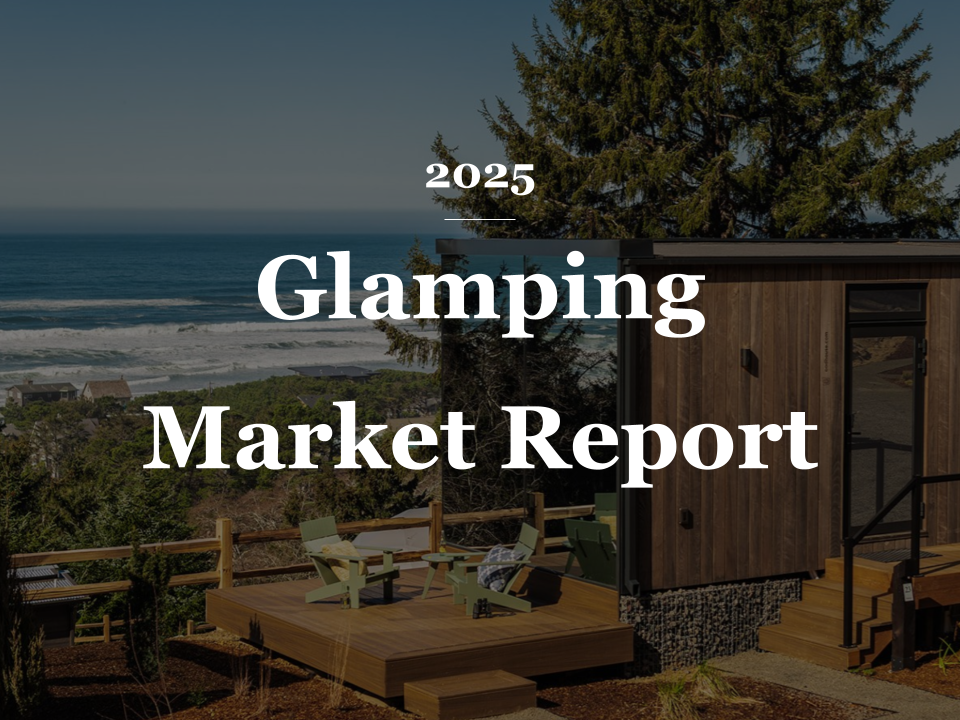
- National benchmarks on rates and property counts
- State-by-state glamping rate comparisons
- Insights for landowners, operators, and investors
- Instant PDF download—great for planning and decks
Frequently Asked Questions (FAQs)
A campground feasibility study evaluates the potential success of a proposed campground based on location, market trends, costs, ROI, and more. It helps you avoid costly mistakes and build a profitable, guest-ready destination. Additionally, a well-prepared feasibility study is often a critical requirement when seeking financing, as banks and investors use it to assess the project’s viability and risk profile.
Our feasibility studies typically take between 5 to 8 weeks, depending on the size and complexity of the property. This timeframe allows us to thoroughly review market data, inspect the property, and prepare a detailed, accurate report. For a more specific timeline based on your project, please contact our team. We’re happy to discuss your needs.
Not necessarily. While having a parcel in mind is helpful, we can also assess multiple candidate sites or advise on ideal site criteria to guide your land acquisition strategy.
We’ve completed over 350 outdoor hospitality projects across North America. Our proprietary data on rates, occupancy, and trends – combined with deep industry experience – ensures that your project is built on real market insight.
Cost varies based on scope and complexity, but we offer transparent pricing and flexible options. Schedule a call with our team to receive a tailored quote and consultation.
A market study analyzes supply and demand trends in a particular market and is typically a good first step in determining the potential for a viable project. It focuses on broader market dynamics, including competitor analysis, occupancy trends, and rate positioning, without tying the findings to a specific site.
A feasibility study includes the components of a market study but is tailored to a specific site. It incorporates detailed projections for revenue, operating expenses, and construction costs, and evaluates key financial metrics such as return on equity and debt service coverage. Feasibility studies are typically used to guide investment decisions or secure financing for new developments or expansions.
An appraisal is similar in scope to a feasibility study but instead determines the market value of a property. Rather than focusing on investor returns, the appraisal provides a professional opinion of value based on market conditions and comparable properties. Appraisals can reflect the value of a property “as is,” “as permitted but not yet built,” “as complete,” or “as stabilized,” and are commonly used for lending, acquisitions, or internal decision-making.