


Sage Outdoor Advisory offers specialized appraisal services for RV resorts and RV parks, ensuring that stakeholders receive accurate valuations that reflect the unique aspects and amenities of these properties. Our appraisals are crucial for financing, selling, or expanding RV resort operations, providing comprehensive assessments that consider market trends and revenue potential.
Breakdown of Our RV Resort Appraisals
Area and Neighborhood Analysis
- Location Assessment: Detailed review of the geographical location and its advantages.
- Demographics: Analysis of population statistics and demographics relevant to the trade area.
- Recreation Opportunities: Identification of recreational amenities and their appeal.
- Demand Generators: Identification and analysis of key demand generators for the business.
- Accessibility: Evaluation of transportation infrastructure and accessibility.
- Area Development: Insights into current and future development projects in the area.
Industry Overview
- Economic Trends: Examination of economic indicators and their impact on the industry.
- Tourism Analysis: Insights into tourism patterns and their influence on the market.
- Outdoor Recreation: Evaluation of outdoor recreational activities and their popularity.
- Outdoor Hospitality: Trends and forecasts in the outdoor hospitality sector.
Market Analysis
- Competitive Summary: Overview of existing competitors and their market positions.
- Market Opportunities: Identification and analysis of potential market opportunities.
- New Competition: Assessment of emerging competitors and their potential impact.
Site and Improvement Analysis
- Zoning Requirements: Review of zoning regulations and compliance.
- Flood Risk and Wetlands Assessment: Identification of any flood risk and / or wetland areas and related restrictions.
- Physical Restrictions: Analysis of physical site limitations.
- Utilities: Evaluation of utility availability and infrastructure.
- Transportation Analysis: Assessment of transportation links and access.
- Improvement Analysis: Assessment of the condition and functionality of the improvements.
Highest and Best Use Analysis
- As Vacant: Review of legally permissible, physically possible, financially feasible and maximally productive uses
- As Improved: Review of legally permissible, physically possible, financially feasible and maximally productive uses
- Conclusions: Conclusion of highest and best use, most likely user and most likely buyer
Cost Approach
- Land Valuation: For unentitled land, research and analyze comparable land sales to develop a market value of the land, as if vacant. For entitled but not yet constructed properties, land valuation is a function of the market value “as complete” conclusion less the cost of construction and appropriate profit.
- Site Development Costs: Preliminary estimation of site development costs.
- Unit Cost Projection: Detailed unit cost projection for development of any glamping / lodging units.
- Amenity Cost Project: Preliminary estimate for all amenities, support structures and FF&E.
- Total Cost New Projection: Comprehensive total cost new estimation for the project.
- Depreciation Deduction: Estimate all forms of depreciation, if applicable..
- Conclusion: Conclude value indication via the Cost Approach.
Income Capitalization Approach
- Rates Projection: Forecasting future rates based on market trends and data.
- Occupancy Trends: Forecasting occupancy rates by unit type and any potential stabilization period.
- Insights and Trends: Utilization of Sage’s proprietary outdoor hospitality database for trend analysis.
- Expense Analysis: Detailed breakdown of projected operating expenses.
- Industry Averages Comparison: Comparison with industry averages to benchmark performance.
- Net Operating Income Pro Forma: Develop a stabilized pro forma NOI for stabilized properties, and a 10-year discounted cash flow for proposed or unstabilized properties.
- Conclusion: Apply the appropriate risk rates to develop the value indication via the Income Capitalization Approach.
Sales Comparison Approach
- Comparable Sales Data: Utilize our extensive database and primary research techniques to identify recent comparable sales of similar properties to the subject. Depending on the property type, this might be on a local, regional or national basis.
- Analyze Sales Data: Analyze all aspects of the comparable sales and apply adjustments in comparison to the subject, to come up with a range of value.
- Conclusion: Analyze the results of the analysis, including which comparables are most meaningful and develop the value indication via the Sales Comparison Approach.
Reconciliation
- Reconcile Approaches to Value: Summarize and analyze the value indications via each approach utilized, including a discussion of which approach is most meaningful and why.
- Conclusion: Conclude market value, and reconcile to any recent purchase price.
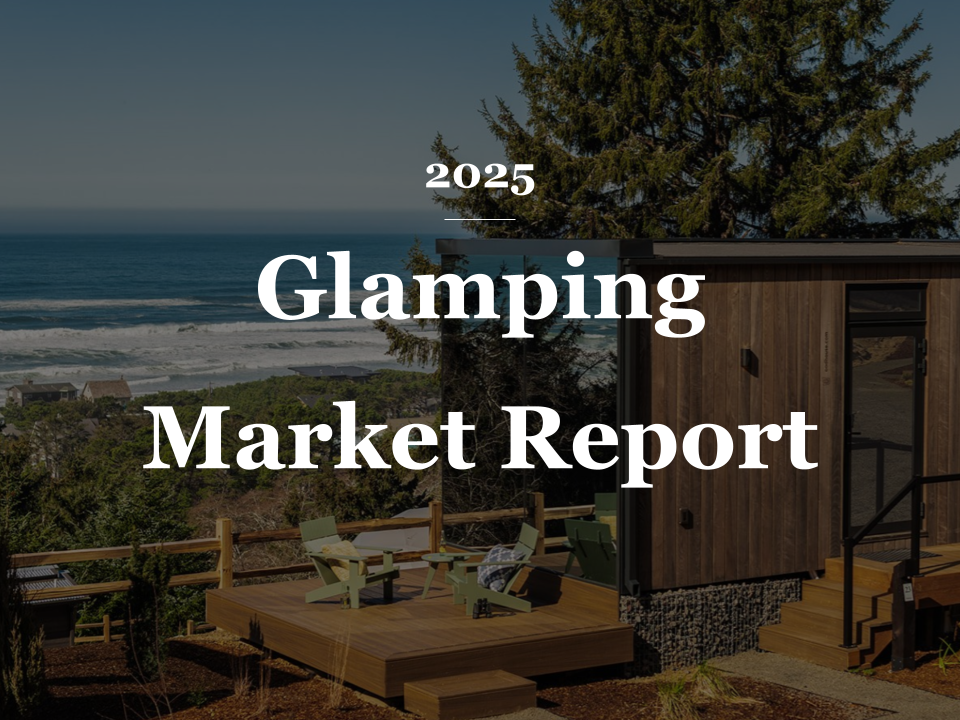
- National benchmarks on rates and property counts
- State-by-state glamping rate comparisons
- Insights for landowners, operators, and investors
- Instant PDF download—great for planning and decks
Frequently Asked Questions (FAQs)
A RV resort appraisal is a professional valuation that assesses the market value of your property based on its location, amenities, income potential, and comparable sales. It’s essential for securing financing, supporting a sale, or making informed decisions about future development or expansion.
Our appraisals typically take between 4 to 8 weeks, depending on the size and complexity of the property. This timeframe allows us to thoroughly review market data, inspect the property, and prepare a detailed, accurate report. For a more specific timeline based on your project, please contact our team, we’re happy to discuss your appraisal needs.
We specialize exclusively in outdoor hospitality, bringing deep expertise and proprietary market data from hundreds of projects across North America. Our appraisals reflect the unique luxury and experiential nature of RV resorts, something traditional appraisers often miss.
Yes. A professionally prepared appraisal demonstrates the financial viability and market value of your RV resort, which is often a critical step in obtaining a bank loan or attracting serious investors.
Not necessarily. We can appraise both existing and proposed developments. For new projects, we use market data, cost projections, and pro forma income to deliver a value estimate based on expected performance.
A market study analyzes supply and demand trends in a particular market and is typically a good first step in determining the potential for a viable project. It focuses on broader market dynamics, including competitor analysis, occupancy trends, and rate positioning, without tying the findings to a specific site.
A feasibility study includes the components of a market study but is tailored to a specific site. It incorporates detailed projections for revenue, operating expenses, and construction costs, and evaluates key financial metrics such as return on equity and debt service coverage. Feasibility studies are typically used to guide investment decisions or secure financing for new developments or expansions.
An appraisal is similar in scope to a feasibility study but instead determines the market value of a property. Rather than focusing on investor returns, the appraisal provides a professional opinion of value based on market conditions and comparable properties. Appraisals can reflect the value of a property “as is,” “as permitted but not yet built,” “as complete,” or “as stabilized,” and are commonly used for lending, acquisitions, or internal decision-making.